
Oracle E-Business Suite (EBS) remains a foundational ERP system for many mid-size and enterprise organizations, particularly those with complex financial environments. Although Oracle’s strategic roadmap emphasizes its Cloud ERP offerings, EBS remains actively supported and enhanced, and many organizations still rely on it as a core business platform.
The modernization of EBS does not necessarily require a wholesale migration to Oracle Cloud. In fact, for many companies, the right approach is incremental: retaining their investment in EBS while selectively modernizing workflows, integrating cloud-native tools, and improving system performance. This strategy enables agility without the risks and disruptions of a whole replatforming initiative.
Understanding the Case for EBS Modernization
For some, the term “modernization” evokes the need to rip out legacy systems and start fresh. But Oracle EBS—particularly R12.2 and later—remains a viable, robust platform with significant room for enhancement. Many organizations simply need more flexibility, automation, and insight from their systems without changing everything at once.
There are several reasons companies might delay or avoid a complete migration to Oracle Cloud:
- Significant investment in EBS customizations and integrations
- Regulatory or operational requirements that favor on-premise architecture
- Internal change management concerns, including user retraining and IT resourcing
- The current EBS environment is still performing and is well-supported by Oracle
Modernization, in these contexts, is about preserving the core while enhancing the surrounding system.
Paths to Targeted EBS Modernization
The spectrum of modernization opportunities is broad, but the most effective efforts usually fall into a few key categories. These offer measurable improvements in efficiency, control, and user experience—without requiring a complete system overhaul.
1. Upgrading to Oracle EBS R12.2.x
One of the most straightforward modernization steps is to upgrade to a current, supported version of EBS. Oracle R12.2.x introduces online patching capabilities, improved security, and longer Premier Support timelines. For clients running 11i or R12.1, this upgrade serves as a critical foundation, ensuring system stability while enabling incremental innovation.
oAppsNET supports these upgrade efforts through structured planning, regression testing, and remediation of deprecated features or conflicts with custom code.
2. Extending Functionality with Lightweight Add-Ons
EBS is comprehensive, but not always complete—particularly when it comes to handling specific industry workflows or compliance nuances. Purpose-built add-ons can fill these functional gaps without disrupting the broader system.
Common examples include:
- Enhanced AP approval frameworks with tiered logic
- Dynamic discounting tools for early payment strategies
- Audit logging utilities for high-risk financial operations
- Custom reporting dashboards tied directly to EBS tables
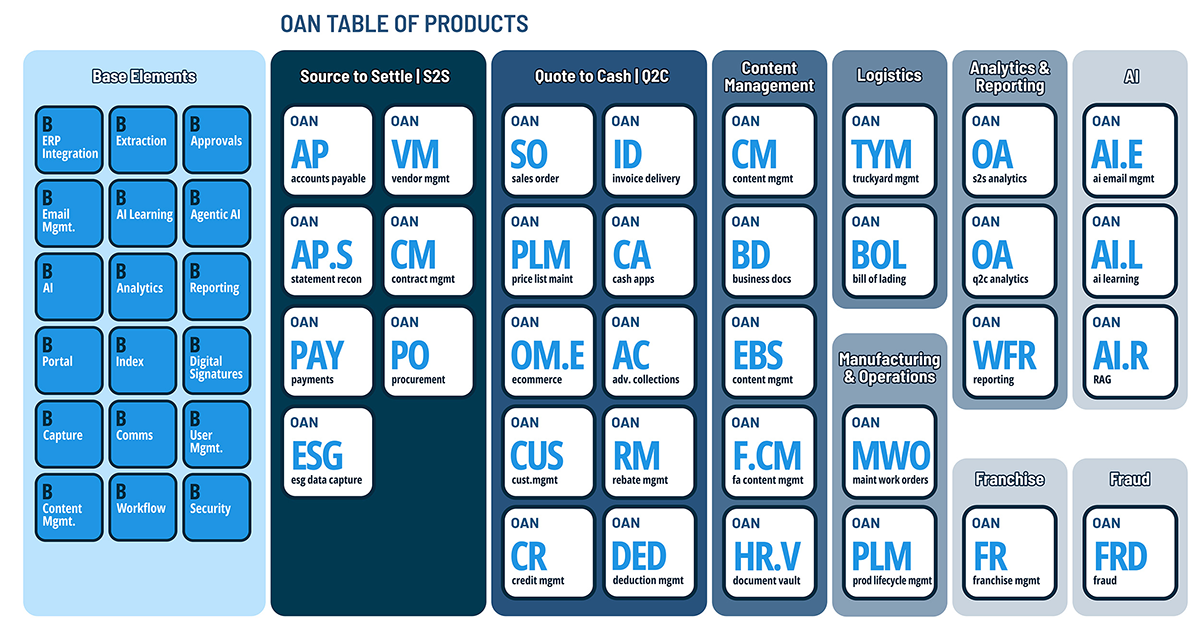
These extensions can be deployed with minimal overhead and often require no re-architecture. oAppsNET offers a suite of these modular enhancements explicitly designed for Oracle EBS environments.
3. Introducing Automation Inside EBS Workflows
Many EBS customers still rely on manual inputs, paper-based processes, or outdated scripts across key financial operations. By introducing automation within the existing EBS environment, organizations can dramatically reduce processing time and error rates.
Examples include:
- Accounts Payable (AP) automation for invoice ingestion, matching, and routing
- Automated journal entry validation against pre-defined controls
- Auto-reconciliations across bank accounts and intercompany ledgers
- Workflow-driven expense reporting tied to policy logic
oAppsNET implements native automation or integrates third-party tools, depending on client needs, while always preserving data integrity and auditability within EBS.
4. Leveraging Cloud Tools Through Integration
Rather than replacing EBS, many organizations are integrating it with cloud-native applications to enhance specific capabilities. These integrations provide access to modern user experiences, advanced analytics, or AI-driven tools while retaining EBS as the system of record.
Some common integration patterns:
- Connecting EBS to cloud-based planning and budgeting tools (e.g., Oracle EPM Cloud)
- Syncing data with modern BI and visualization platforms
- Integrating with automated testing suites like Tricentis for continuous validation
- Tying in third-party mobile apps for travel and expense management
Using Oracle Integration Cloud, APIs, or middleware, these systems can work in tandem to improve agility without replacing core functionality. oAppsNET’s integration team supports a range of scenarios across hybrid environments.
5. Stabilizing and Optimizing with Dedicated DBA Support
Even well-functioning EBS instances can suffer from underlying database inefficiencies. Performance tuning, proactive monitoring, and ongoing administration are all critical to maintaining high system availability—particularly during modernization efforts when new components are introduced.
oAppsNET offers 24/7 managed DBA services tailored to Oracle systems, covering installation, patching, performance optimization, disaster recovery, and more. This support allows internal IT teams to focus on a modernization strategy rather than reactive troubleshooting.
Why Incremental Modernization Works
EBS modernization is not an all-or-nothing proposition. Many organizations benefit from a phased approach that spreads cost, limits disruption, and aligns improvements with business readiness.
Benefits of this approach include:
- Control over timing and budget – No need to absorb a single large capital project
- Preservation of existing investments – Customizations, training, and reporting can be retained
- Flexibility to transition over time – A modernized EBS can later serve as a staging ground for complete cloud migration if desired
- Reduced operational risk – Gradual changes are easier to test and adopt
Importantly, modernization in place signals to stakeholders that the organization is evolving with purpose—not chasing trends or creating unnecessary instability.
oAppsNET’s Approach to EBS Modernization
oAppsNET has spent more than two decades helping organizations adapt and evolve their Oracle environments. Our approach is rooted in practicality—we focus on delivering measurable value through structured, stepwise transformation.
Our EBS modernization offerings include:
- Prebuilt financial automation apps tailored for EBS
- Integration support with Oracle Cloud and third-party tools
- Automated testing frameworks for patch validation
- Managed DBA services
- Targeted advisory to prioritize high-impact modernization initiatives
Whether clients aim to extend the lifespan of their current environment or eventually prepare for Oracle Cloud, we help finance and IT leaders find a path forward that aligns with both operational reality and strategic ambition.