
by Sophia Riley | Apr 16, 2023 | News
[vc_row][vc_column][vc_single_image image=”4322″ img_size=”large” alignment=”center”][/vc_column][/vc_row][vc_row][vc_column][vc_column_text]oAppsNet® is excited to participate at #OracleCloudWorld2023 an official exhibitor. Come by booth #88.
[/vc_column_text][/vc_column][/vc_row][vc_row][vc_column][vc_column_text]
[/vc_column_text][/vc_column][/vc_row][vc_row][vc_column][sc_list]
- oAppsNET P2P & S2S Transformation Platform
- Mobile Applications
- Artificial Intelligence
- Content Mangement
- Accounts Payable Automation
- Sales Order Automation
- Content Management
[/sc_list][/vc_column][/vc_row]
by Sophia Riley | Apr 13, 2023 | Accounts Payable
Like every other aspect of running a business, the accounts payable system is subject to some degree of risk associated with it. Indeed, business-to-business (B2B) transactions that are deceitful or completely unnecessary can result from unknown financial territory, defective records, or other types of anomalies of a similar nature. It is common knowledge that making fraudulent or needless business-to-business payments can have a detrimental effect on a company’s finances, which can sometimes be quite severe.
There will always be some degree of risk associated with running a business. While this is a reality that we have no choice but to accept, some metrics can be utilized to reduce the extent of this risk.
One of these metrics that you may utilize to maintain the safety and security of your company is the accounts payable risk and control matrix. But what are accounts payable risk and control matrix, and how can it help your business? Let’s find out.
What is a payable risk and control matrix?
The accounts payable risk and control matrix is a tool utilized to help businesses reduce the amount of risk they are exposed to as a direct result of their account payables. While it is recommended that organizations be flexible and responsive to changing conditions, it is also a good idea for them to have some sort of risk control matrix. An AP risk and control matrix lays out the many control objectives that must be taken into consideration by businesses. If these controls are not checked regularly, there is a possibility that the company’s risk protection controls will become compromised.
Why your business needs accounts payable risk and control matrix
As a business owner, if your business still lacks an accounts payable risk and control matrix, you might be wondering if it’s really necessary. But the truth of the matter is that this tool is very crucial. Here are some of the reasons why your business needs it:
- Protect against the inherent risks in accounts payable
Processing a significant number of invoices is a consistent requirement for businesses. The accounts payable departments receive many invoices daily, which they must compare to the corresponding purchase orders and pay. There are various ways in which this process might go awry, particularly when your accounting is done manually. This is the kind of labor that carries with it a certain amount of natural danger.
Investopedia describes inherent risk as “the likelihood of erroneous or misleading information in accounting statements originating from something other than the failure of controls.” In other words, inherent risk is not caused by a failure of controls.
Fundamentally, inherent risk results from either a lack of knowledge or errors brought on by unexpected or complicated computations. Thankfully, accounts payable risks and a control matrix can help protect your business from such inherent risks.
- Control prevalence of residual risks
Even when corporations exercise a reasonable amount of prudence and perform rigorous accounting, there is still a possibility of risk. This type of risk is referred to as residual risk, and Compliance Week defines it as “the exposure that remains after you’ve examined the existing controls.”
Residual risk is a type of risk that arises when a company has taken some steps to handle a potential problem but, in one way or another, hasn’t dealt with the issue completely. Residual risk is also referred to as audit risk. It’s the same as when a firm replaces the servers for its internal accounting network but fails to invest in off-site data backups in case of a natural disaster. In that case, the company risks losing all of its financial data.
In addition, negligence is not a necessary condition for there to be a residual risk. Some risks, like inherent risks will likely continue to exist no matter what a corporation does or does not do. Accepting a certain level of risk is one of the ways to run a successful business.
The important thing is to cut down on any inherent or residual risks as much as possible. A risk and control matrix for accounts payable is an excellent tool for accomplishing this goal.
How to build your accounts payable risk and control matrix
Now that you understand what an accounts payable risk and control matrix is and why your business needs it let’s see how you can create matrices to curb the risks mentioned above.
Creating an inherent risk matrix
Because the level of residual risk is decided by the level of inherent risk that has been tabulated, it makes perfect sense to calculate the level of inherent risk before attempting to grasp the concept of residual risk.
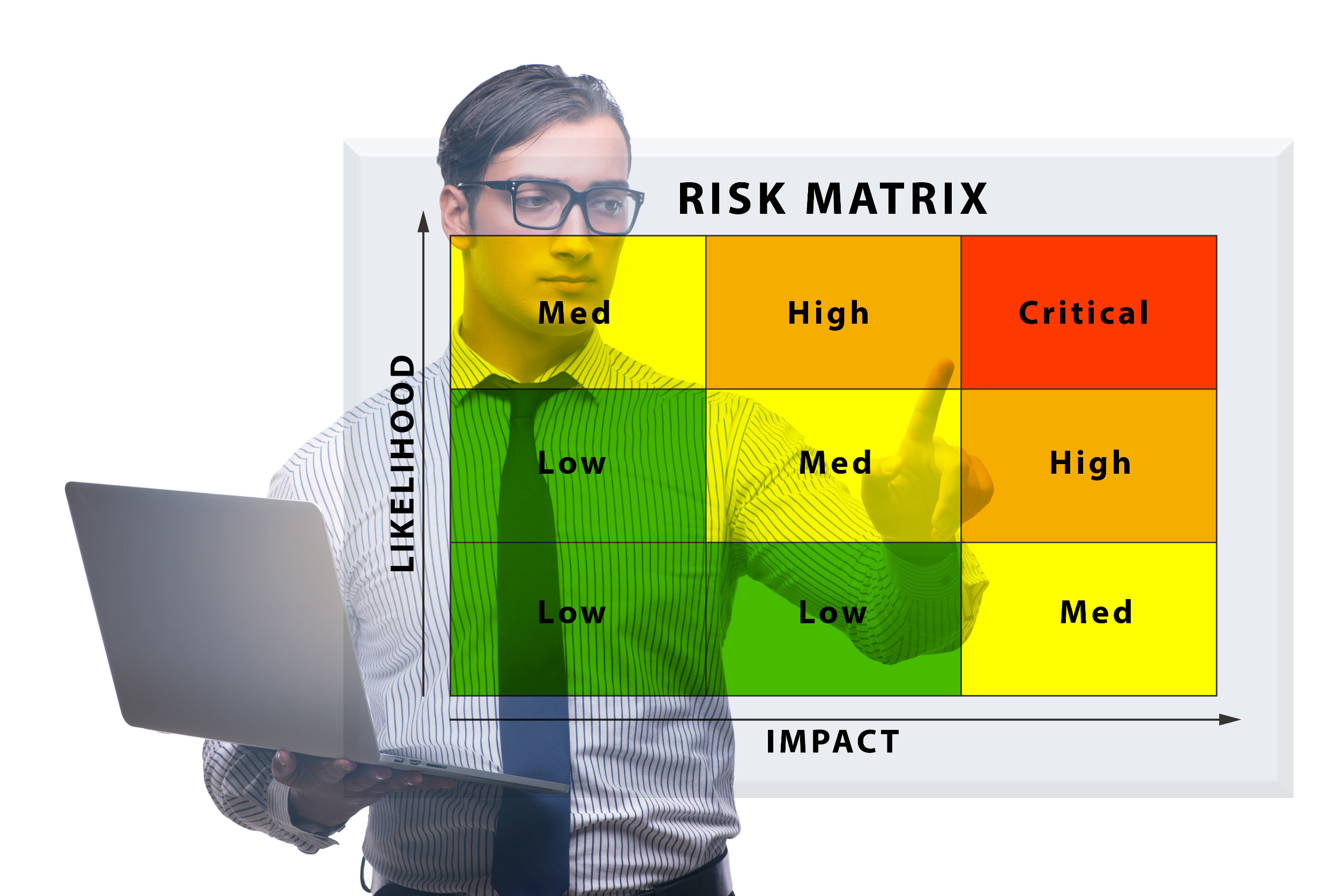
An inherent risk matrix takes a form of a chart. Use a scale that measures potential hazards’ impact on the X-axis. The least risky options should be at the beginning of the axis, and the riskier options should be further along the axis.
For the Y-axis, the scale must indicate the frequency with which the risk occurs, beginning with “Rare” and progressing to increasingly frequent occurrences as the chart continues.
Creating a residual risk matrix
After creating an inherent risk matrix, it is possible to use it to generate a residual risk matrix. Place a scale proportional to the estimated effectiveness of whatever control mechanism your team has designed somewhere along the Y-axis. The scale should begin with a strong value at the bottom and progressively weaken as the Y-axis moves higher. Create, along the X-axis, a scale that ranges from the smallest possible to the largest possible calculated inherent risk.
A residual risk matrix does not need a predetermined number of squares, just like an inherent risk matrix does not have a predetermined number of squares. For consistency and comparability, it is wise to utilize the same number of squares in a residual risk matrix as whatever you’ve selected with your inherent risk matrix. Using the same number of squares in both matrices will ensure that your results are comparable.

by Sophia Riley | Apr 4, 2023 | Accounts Payable, Artificial Intelligence
Artificial intelligence has hugely impacted accounts payable over recent years. There have been substantial breakthroughs achieved across the finance and procurement processes over the past decade, thanks to AI. There has also been a significant push toward automating manual and tactical processes, particularly in the accounts payable department. The push results in global firms focusing their attention and, as a result, undertaking process improvement projects.
What role does AI play in the process of accounts payable?
Before we can understand how AI impacts the accounting and finance industry, let’s first grasp what AI is and how it may be applied inside the accounts payable department.
Artificial intelligence [AI] is a subfield of computer science. It entails the creation of machines that are capable of thinking and behaving like humans. Therefore, we are talking about software or a program that demonstrates human intelligence.
They can gather information, analyze it, and complete the duties given to them. Examples include speech recognition, the ability to make decisions, the ability to compare facts, and much more. Examples include chatbots such as Siri and other intelligent home appliances that can be controlled by speech.
Here are some of the roles that AI plays in accounts payable processes:
- Invoice capturing
There are a variety of formats in which invoices can be received. It is possible to employ AI-powered systems to retrieve data from hard copies, emails, or electronic invoice generators. The data taken is then matched automatically with the appropriate supplier, and a bill is created in the end.
If this is not the case, accountants will be required to manually search for invoices in a number of different locations before uploading them for payment. The OCR [Optical character recognition) serves as the mechanism that makes this possible.
- Matching invoices
The particulars of the invoice have to be checked for accuracy before it can be processed for payment. Two-way or three-way matching strategies are utilized to ascertain the correctness of the comparison with the purchase order. Whenever there is a discrepancy between two pieces of information, the AI will promptly detect and transmit it.
- Detecting fraud
Fake bills and invoices almost always appear like their authentic counterparts, but their primary purpose is to steal your money. It is possible to apply AI to detect irregularities in bills and forward them for further investigation. During the identification process, it looks for patterns and compares invoices that have already been processed.
- Helps with the analysis of data and forecasting
It is able to perform analysis on a massive amount of data and come to meaningful insights. The financial staff may find it easier to create budgets for months to come with this information. Based on your expenditures, it may also make recommendations for cost-effective procedures and strategies that save money.
Ways in which AI in accounts payable systems help reduce manual intervention
- It eliminates labor-intensive tasks.
- It automates the extraction of data and auto-populating codes
- It automates reminders for approval and payments
- It enhances the accuracy of processing batch invoices
- It promotes timely payments
How AI-supported solutions can help your business
- Improved business efficiency
Efficiency is crucial in any business, regardless of size. In accounts payable, efficiency translates to how faster an invoice is cleared out of the company’s system. You can achieve that through automation. The required level of efficiency can be reached through invoice matching and processing automation.
- Increased transparency
Transparency is also another vital aspect of running a successful business. A confidential accounting system is impossible to maintain. Departmental managers and finance teams can monitor payments in real time with the help of inputs provided by a dashboard that is both open and transparent. Due to this, everyone will better understand the company’s regular payments. Tracking improper practices and creating monthly budgets are made easier due to this.
- A decrease in fraud risk
While it is possible to detect fraud, real-time fraud detection is needed to rectify it and seal its source. Thankfully, that can be achieved by AI-based accounting systems. They make you aware of any discrepancies, mismatches, and anomalies they find to ensure that nothing is hidden from you.
They use a variety of checkpoints to ensure that no false or duplicate invoices are allowed to pass through. The AI also remembers trends and patterns and detects anything that differs greatly from what is typical.
- More informed financial decisions
The information that the financial team requires is provided to them, and it is also in a presentable format. They don’t need to maintain as close of a relationship with the accounting department as they once did because this data is also up to date.
Additionally, AI can draw insights regarding spending and share them with the relevant departments. This is based on the patterns of spending you’ve done in the past. The use of artificial intelligence in accounts payable helps you compare values by comparing large chunks of data that are much older than months.
This kind of calculation can’t be done by hand because it’s too complicated. They can be utilized as inputs in the process of cost projections for the future. The higher the amount of data it has access to, the more accurate the insights it generates.
The future of accounts payable for businesses
The introduction of new technologies has affected nearly all of today’s business sectors. Applications created with cutting-edge technology may be found just about anywhere. There is more than just accounts payable. The accounts payable process has already been automated and improved thanks to the application of AI technology.
In many AI applications, AI principles such as machine learning and robotic process automation (RPA) are already used to acquire and analyze real-time data. It possesses the limitless potential to upend the current state of the financial environment.
Data analytics, risk assessment and flagging, compliance management, chatbot support, and many more activities are just some of the responsibilities that are likely to be taken over by AI in the future. AP teams can identify efficient solutions at a lower cost and make auto-classifications when they utilize AI.

by Sophia Riley | Mar 30, 2023 | Accounts Payable
Discounts and merchant incentives have been intrinsic parts of the trade ever since the inception of the market. When the world was using the barter system, the system of credit with associated people worked well. However, as the cash economy came into existence, we saw the development of multi-level markets from manufacturers to consumers. Retail marketing saw a rising need for discounts as part of marketing techniques. Soon enough, we were ushered into the industrial revolution, where the idea of the free market was conceived.
Free markets promote healthy competition by which they are self-regulated, barring a few exceptions. Product pricing plays an important part in a free market economy because it determines the sustenance of a business in fierce competition. It is for this reason that retail discounts soon became very common. Dealers preferred to move out high-volume goods at a low margin over low volume with a high margin.
To spare a good enough profit margin, the retail businessmen started to build credit with their suppliers to build a long and healthy business relationship with them. When these retailers saw a surge in market demand, they started asking for suitable discounts from the suppliers. This discount would help them maximize profit margin and execute expansion strategies.
Now, we have discussed the evolution of industries and markets. In terms of traditional business, there is only one thing that changed, and that is the use of e-commerce and technology. The principles of traditional business setup are the same as they were 200 years ago. However, things are changing now.
The market is dynamic, and it demands the same kind of activity from those calling the shots. As a result of this economic growth, certain business strategies are breaking the shackles of traditionalist ideas. This has impacted the idea of discounting in supply chain management. Static discounts are being replaced by dynamic discounting strategies.
However, if you are new to the business, chances are you are new to this discounting idea. So, it is important to know what dynamic discounting is, how it works, what the benefits are, etc. This will help you make an informed decision for your organization. In this article, we will discuss everything there is to know about dynamic discounting.
What is dynamic discounting?
We have already made so much fuss about this revolutionary business model for the suppliers that it is now time to address the elephant in the room. To understand dynamic discounting, we must understand static discounting first. This will help you in developing a contrasting understanding of the subject.
So, static discounting is a business model where suppliers can be paid for their invoice by the buyers in advance, before the delivery of the good, but at a discounted price. That is to say, under the terms of static discounting in a contract, a supplier is presented with two ideas; 1. Receive the full payment on the invoice on the delivery date as stipulated in the contract, or 2. Receive an advance payment for the goods at a discounted price.
The suppliers opt for the discounted payment because they need a cash flow so they can pay for the operational cost without bearing too much burden. However, this means a lower profit margin for the suppliers. Therefore, the idea of dynamic discounting was introduced to put the suppliers on equal footing with the buyers.
Under the terms of static discounting, the time limit and the discount rates are fixed. These terms are usually set by the buyers under the “take it or leave it” principle. Now, dynamic discounting terms offer flexibility to the suppliers regarding duration and discount rate.
Dynamic discounting works on an “always on” basis, i.e., it allows the suppliers to offer discounts according to their need for cash flow. This will help them determine their needs and requirements in real-time. The “always on” basis also eliminates the duration restriction. So, under the terms of dynamic discounting, a supplier can offer discounted rates at any point of time before the scheduled delivery.
Dynamic Discounting vs. Static discounting
We have already discussed the two discounting modules and how they contrast. Now, let’s look at some key differences that we can observe in both these models:
- The discounting price and the timing clause are fixed in static discounting modules. Whereas dynamic discounting allows for greater flexibility in this regard.
- In the case of dynamic discounting, suppliers have to get the invoice in accordance with the contractual terms. Once the invoice is approved, dynamic discounting terms can be invoked at any point at the option of the supplier. This is completely different with regard to the static discounting model, where the discount rate and timing are fixed under the contract terms.
- Suppliers gain equal footing in dynamic discounting, which leads to healthier business relations. Static discounting modules give the buyers an undue advantage in a deal.
- In the case of static discounting, ad hoc early payment requests have to be entertained by the supplier that may adversely affect the business operations. Dynamic discounting eliminates the chances of ad hoc requests, which improves the effectiveness of the discounting module.
Why prefer dynamic discounts over static ones
In this part, we will discuss the advantages of a dynamic discounting model and why businesses should opt for this. As discussed earlier, static discounts are preferred in a traditional business setup, which is not ideal in the modern day and age. Therefore, it is crucial to understand the advantages of dynamic discounts over static discounts:
- Dynamic discount puts the ball in the supplier’s court. Under the terms of dynamic discounting, suppliers can enforce the “take it or leave it” principle.
- Dynamic discounts provide the opportunity to the suppliers to structure the standard discounting rate in accordance with the market and cost of operations.
- The static discount model restricts the time limit in which advance payment facilities can be availed, which is not sustainable because the market is volatile.
- The time limit in case of static discounts can put the suppliers in a tight situation, especially in a scenario where they need the cash flow desperately, but the window to avail of the advance payment option is closed.
- Ad hoc requests under static discount models are known to disrupt the Accounts Payable process. Your organization may have the requisite cash flow to deliver the goods or services under the stipulated duration. Still, if an ad hoc request is placed, you will be obliged to receive the advance payment in return for the discounted rates. This issue can be solved efficiently using dynamic discount models.
What are sliding discounts?
A sliding discount is a type of traditional static discount invented to suit modern needs. However, if you analyze the AP process disruption caused by both these modules, you will see that there is not much difference. A sliding discount module is a system where the supplier is given the opportunity to offer lower discounted rates depending on the duration.
So, if a supplier receives an advance payment right when the invoice is approved, the discount rate would be higher and vice versa. One may think that this module gives suppliers some advantage in a business relationship, but we must note that this is still a branch of traditional discount principles. Under the terms of sliding discounts, the duration is varied, but the discounting rate is fixed, which doesn’t give much breathing room to the supplier.
Why prefer dynamic discounts over sliding discounts?
Now that we have understood the technicalities of sliding discounts, let’s look at some of the advantages dynamic discount models have over sliding discounts. This part also aims to list some of the limitations of sliding discounts. Let’s take a look:
- Sliding discount offers the supplier an opportunity to choose the duration of the time limit. However, the discount rate is still fixed by the buyer.
- The fixed discount rate in this model puts the supplier at an advantage because he has to offer the stipulated discount irrespective of the market and affordability.
- The dynamic discount model, on the other hand, promotes the “always on” marketplace policy. According to this policy, the supplier can initiate the offer for the discounted price and control the timing and rate.
- The dynamic discount model is also quite efficient for the business operations of the supplier because it allows the supplier to choose the invoice where he wants accelerated payments. Moreover, the seller can take a call on whether or not he wants accelerated payments on certain invoices.
- Unlike sliding discounts, the dynamic discount model creates a system on which suppliers can rely for their business operations.
Factors considered in the dynamic discount model
In this article, we have already discussed the advantages or benefits of the dynamic discounting model. Moreover, we have also shed some light on the reasons why businesses should depart from traditional business techniques and switch to more dynamic alternatives. Now, in this part, we will talk about some factors considered when structuring a dynamic discount model:
- The discount rate offered by the supplier under the contract or tender.
- Evaluation of all the standing offers submitted by the contemporary suppliers.
- The difference in the timeline in advance payment and the stipulated duration.
- The cash available at the buyer’s disposal to make the advance payment. We also consider the third-party financial assistance available to the buyer.
Conclusion
The market today is evolving at a great pace. Many obsolete business practices have been put to rest, especially with the advent of technology. Therefore, it is high time that we adapt to the market’s needs. The dynamic discounting model balances the buyer’s and supplier’s rights and creates a hassle-free business transaction.

by Sophia Riley | Mar 28, 2023 | Vendor Management, Accounts Payable
If you’ve ever been in the business of managing vendors, I’m sure you’d agree that there’s no such thing as having too many tools at your disposal. In fact, the more resources you have at your disposal, the better off you’ll be when it comes to streamlining processes and improving efficiency. That said, vendor management systems (VMS) are essential for any organization looking to become more efficient with its supply chain operations.
VMSs are designed to help organizations manage their supply chains by providing real-time information about the status of their vendors and suppliers. VMSs can also be used to improve processes, increase transparency and accountability, reduce costs, improve efficiency, and facilitate compliance with industry regulations.
In this article, we’ll explore some of the benefits of implementing a VMS into your business model so let’s dive right in.
Improved risk management in your supply chain
A Vendor Management System (VMS) can help you manage the risk in your organization, supply chain, and business. Risk management is an important part of any business because it helps to minimize losses and improve profitability.
The main reason companies implement a VMS is to reduce their exposure to risk by finding out about new suppliers before they are contracted for a project or job. In addition, using this system makes it easier for organizations to manage their existing vendors effectively to have better control over the quality of their products or services.
Good vendor management software will enable you to track all aspects of vendor performance, such as managing contracts, payments, payment disputes, increasing security levels, monitoring compliance requirements, etc.
It’s not uncommon for a company to have hundreds of vendors. The sheer number of vendors can make it difficult to manage them all. In addition, you need to be aware of many risks associated with vendor management and manage appropriately.
A good VMS can help reduce these risks by providing:
- A single point of entry for the vendor relationship lifecycle
- Automated approval workflows that assess risk and help prevent fraud, theft, loss, and abuse
- Enhanced controls through robust data collection
A VMS can help you assess risk and ensure that your vendors are compliant with industry regulations. They also make it easier to track vendors, manage invoices, and keep all vendor information in one place. The best part is that they do it all while helping you keep your business running smoothly.
Single unified system
The vendor management system (VMS) is a single, unified system that manages all your vendors and their information. This means you can access data on your suppliers in one place, giving you complete visibility over the entire process.
A VMS allows you to collect more data than just supplier pricing and inventory levels, such as:
- Your company’s buying history with each supplier
- Product specifications, certifications, and quality control procedures
- Delivery tracking numbers for each shipment
You’ll receive notifications when shipments are out for delivery so you can plan accordingly. This will help improve planning and ensure timely deliveries.
This type of centralization is vital to controlling costs, reducing errors, and maximizing efficiency. Without a VMS, you’ll have difficulty keeping track of all the information you need to effectively manage your vendors.
This means one system can manage all your vendors, giving you complete control over the entire process. This is especially helpful for industries like retail, with many different suppliers to keep track of.
Real-time data and analytics
Real-time information is critical, especially in business operations. A vendor management system (VMS) will give you a full picture of how your suppliers are performing, allowing you to make decisions based on the most up-to-date information.
You can also use these systems to improve your processes. If a vendor is experiencing delays or not meeting quality standards, you can take action before your clients are affected. You may even discover new ways of working to increase efficiency across the board.
A vendor management system gives you the information you need to manage your vendors in real-time. The data is available at a glance, allowing you to decide how best to improve processes and customer satisfaction levels. With real-time information on how they’re doing, you’ll know exactly which supplier is causing the issue—and take steps to fix it.
The real-time information provided by a vendor management system can help you:
- Make decisions based on the most up-to-date information about your suppliers’ performance.
- Find ways to improve your processes and increase efficiency.
- Take action before clients are affected by delays or quality issues.
Reduced costs
In a digital world, there is no better way to reduce costs than by automating the process. The vendor management system can automate all the processes, reducing human errors and making it easier for you to manage your vendors.
You need not spend hours conducting meetings with your vendors, issuing them invoices, and waiting for their payments. With the help of vendor management software, you can easily automate these processes and save precious time while streamlining operations in your business.
This software solution is one of the best ways to reduce costs. It helps you in managing all your vendors effectively. You can easily set up a system where you learn about new vendors and automatically send them invoices whenever they are due.
Customer satisfaction
Satisfied customers are key to the success of any business. And unfortunately, it’s difficult to keep your customers happy when dealing with multiple vendors. One late delivery could cause a chain reaction that results in a dissatisfied customer or two.
Luckily, vendor management systems help create positive customer relationships by keeping track of all your purchases and creating an online dashboard that shows you which vendors are meeting their deadlines and delivering products on time—so you can focus on other parts of your company.
When you’re in the business of customer satisfaction, having a full view of your supply chain is essential. These systems provide just that by making it easy to track down any missing information and contact vendors if there are any issues with the delivery dates or product quality.
Data protection and privacy
You should also be aware that data protection and privacy are top priorities for all organizations. With vendor management systems, you can monitor the data of your employees, contractors, and customers. This ensures that none of them share sensitive information with anyone who isn’t authorized to have it.
Also, if there’s any doubt about whether or not someone should have access to certain records, it’s easy enough to check the system to confirm this person needs those records before they can be released.
It’s also possible to prevent unauthorized data sharing through a vendor management system. You can do this by setting up an access control list (ACL) for the system, which will restrict who gets what information from whom on a per-user basis. This makes it harder for employees or contractors to accidentally share sensitive data with someone else who shouldn’t have it.
Increased compliance and regulatory oversight
Since VMS is integrated with your ERP or MES software, you can use it to ensure that your organization complies with industry regulations. The system will be able to monitor each step of the production process and record key data along the way. This provides a clear audit trail for regulators if any problems arise later.
VMS also helps ensure that your organization complies with internal policies and procedures by having automated rules put into place based on those policies. These rules can be easily altered if needed as well, which means that if there is a change in policy, you won’t have to worry about updating all of your existing rules for every single product because they’ll already be taken care of by default.
Finally, VMS helps ensure that you’re staying current with external regulations, too: things like quality control testing requirements or safety standards must be adhered to before products get shipped out into their markets. However, these requirements vary depending on where they’re headed.
Improved vendor relationships
A vendor management system (VMS) is used to manage the relationships between your company and its vendors. This includes a wide range of tasks, including:
- Providing data on quality, safety, and service records
- Ensuring that vendors have met all required standards and regulations
- Measuring compliance with policies
By incorporating these aspects into your VMS, you can help improve the performance of your vendors. In turn, this will lead to more efficient operations for both parties involved.
Including all of these tasks into a single tool helps vendors manage their business more effectively. By making this information easier to access, they can better find ways to improve their services and streamline the process of providing goods or services.
In addition to improving vendor relationships, vendors also benefit from accessing the data in an easy-to-use format.
Improvement in vendor sourcing and selection process
You can easily improve the process of vendor sourcing and selection by using a VMS. A VMS is software that will provide you with all the information related to vendors, such as their ratings, feedback, contracts they have signed in the past, and so on.
With an effective vendor management system (VMS) in place, you can improve your vendor sourcing and selection process by:
- Having direct access to all the information regarding vendors at any given time;
- Having an easy-to-use interface that allows you to filter out relevant information according to your criteria;
A VMS also helps in the management of vendors and their contracts. With a VMS helping you to manage vendors, you can:
- Have a real-time overview of all the contracts signed by both parties
- Easily track down which vendors are available at any given time and make the necessary arrangements to ensure that your projects get completed with minimal disruptions
- Have an effective way of tracking vendor performance, thus increasing their productivity and reducing costs incurred due to late deliveries or poor quality work.
Conclusion
Vendor Management Systems are a great way to ensure you get what you need from your vendors. They can help increase efficiency and improve communication between your company and its suppliers by providing quick access to information about orders, shipments, and invoices. With so many benefits available, it’s no wonder many businesses use these systems.