The term ‘digital transformation’ is pretty much common in business. The phrase “digital transformation” (DT) refers to a comprehensive framework and the corresponding plan created to combine employee effort, business processes, and technology to achieve better efficiencies and improve customer satisfaction. The fundamental procedures required to improve the technology-enabled blueprint for managing a specific business operation for maximum benefit are summarized in digital transformation best practices.
Digital transformation offers many benefits to businesses, including improved productivity, increased agility, increased ROI, more business growth opportunities, etc. However, it’s worth mentioning that businesses can only enjoy these benefits if they implement the best digital transformation practices.
In this article, we discuss the best digital transformation practices in 2023. So, without wasting much time, let’s delve into them.
Identify the business problem
Production improvement, customer satisfaction, sustainability, etc.—call for applying various technologies and tactics. In this context, businesses must remember that technology is merely a tool for conducting business and that adopting technology solely for the sake of having fancy technology will result in a loss of resources. Digital transformation ought to benefit the company. Companies can identify a clear aim and KPIs they intend to attain through digitalization by understanding the business challenge, which aids in defining a plan.
Put the customer’s needs first
Discover who your consumers are, what they want, and how they want to interact with your company using data gathered across the entire organization. Provide a detailed picture of the trends, preferences, and problems experienced by customers. The likelihood of a successful digital transformation will increase if you have a deep grasp of the demands and challenges of your customers. You can provide greater value by making it simpler for clients to do business with you and address their issues.
Have digital-savvy leaders.
Throughout a digital transformation, there are changes at all levels, particularly regarding skills and competencies. About 70% of businesses report that the top teams in their companies change due to the transformation, especially when new leaders with experience in digital technologies join the management team.
The success of a transformation can be largely attributed to the addition of such a leader. It is also important to take on transformation-specific responsibilities, such as individual initiative leaders and program management or transformation office executives who devote their entire time to the change endeavor. Leadership dedication is also another major factor in success. A transformation’s success is more likely when important personnel—both senior organizational leaders and those in roles specifically related to the transformation—are more involved than in prior change initiatives.
Unify data and information.
Workflow is constantly hampered by information silos, which constantly cause conflict. Customers will have more access to their orders if your enterprise resource planning (ERP) system is upgraded or optimized to create a single source of information. Customers will then find it simpler to run their own businesses and customer connections. Also, it will lay the groundwork for enhancing your staff’s capacity to address inquiries from or problems with clients.
Involve Employees
Workers frequently have more knowledge about information gaps, broken processes, and workflow obstacles. For the best return on investment, they can offer advice on deploying new technology or optimizing currently used ones. Increase the knowledge and skills of your staff members by training them beforehand.
Employee adoption of new procedures and technology increases when involved in planning and implementation. The installation will go more smoothly if more personnel are involved throughout the process.
Measure your achievements
Decide on how to accurately track and identify the value that the digital transformation will produce. Key performance indicators (KPIs) should be described and used to gauge your progress. It might be better operations, improved client experiences, higher employee productivity, and better goods and services. Regularly gather and evaluate relevant data throughout the whole organization to improve operations. To determine the ROI of the digital transformation, it is crucial to use the appropriate KPIs
Establish a structure of corporate governance
To improve their chances of success, businesses must promote their cultural values through an effective corporate governance structure. In a good governance system, there ought to be:
The CIO office assembles the required teams, fosters communication among them, and tracks each stage of the digital transformation by choosing pertinent KPIs.
Leaders in the line of business are in charge of carrying out the CIO’s specified tasks within the allocated budget. Focuses on achieving KPIs and functional goals.
The council for digital transformation facilitates communication between the CIO and line-of-business executives. Setting the budget and distributing the funds among the company leaders’ lines of operation would be the council’s most crucial duty.
Have a systematic strategy for transformation
Most individuals, especially employees, resist change. There is no doubt about that. Trying to digitize too many things simultaneously may result in failure or delays. A better approach is to change one process at a time. Develop digital projects gradually and encourage staff to accept change. Instead of pressuring them to adopt change, provide them with the tools to do so. Business transformation requires meticulous attention to detail, so pause frequently and evaluate your progress.
Enhance customer operations.
If you go through a digital transformation, customers may find it simpler to do business with you. Your customers may find it simpler to address their business difficulties by using the same technologies and procedures that support your change. Higher levels of customer loyalty will result from services like anything-as-a-service (XaaS), digital twins, augmented reality, agile design, linked products, performance optimization, and others that lower customer prices and/or provide more flexibility, more assurance, and faster turnaround.
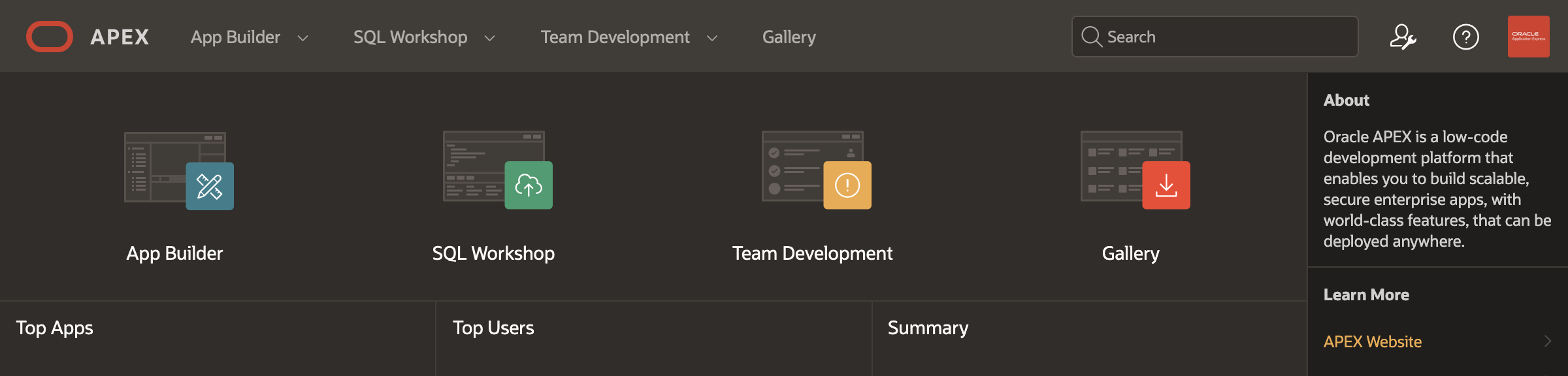
In Oracle APEX 22.2 new support for Template Directives is now available for both Classic and Interactive Reports.
Template Directives enable the ability to apply client-side directives to control the formatting of your data returned from SQL.
In the past, when creating an interactive report, developers had no options when it came to formatting special columns, such as multiple values returned for each SQL query line. Now with new Template directives, you can place the formatting in the APEX tool, leaving your SQL queries clean from client-side formatting.
How about an example?
Let’s say a developer needs to display data in an interactive report that contains a column with multiple values.
In the past, developers could only display the data as it was presented in the SQL statement, unless they introduced client-facing code, like HTML items like bulleted lists, or tables, etc, within the SQL query.
Now with APEX 22.2, developers can place any client-facing formatting code outside the SQL statement, making the statement much cleaner to read and maintain.
Lets display data from this table: EBA_DEMO_APPR_APPROVERS.
As you can see the raw data in the JOB_CODES field has a colon-separated list of job codes for each user.
To display data in this table in a report, we have created an APEX Interactive report using the table as the Source.
When displayed without formatting the Job Codes field is shown as it is returned in the SQL statement in an interactive report:
Now, after adding a template directive in the Column Formatting section of the IR, within the HTML Expression field for JOB_CODES, a bulleted list can be displayed
After adding the template directive to the column, the following formatted data can now be displayed
So there you have it. APEX developers no longer need to include client-side formatting logic within SQL queries in interactive reports.
Better yet, the same new Template Directive functionality is now available for Classic reports in APEX 22.2.
What is Oracle APEX?
Oracle APEX is a powerful and widely used low-code development tool that is popular among developers and businesses alike because of its ease of use, robust functionality, and scalability, ability to integrate with other Oracle products, and large community support.
Choose oAppsNet as your Oracle APEX partner
Reach out to oAppsNet today to see how we can help you maximize your investment with Oracle.
Why us?
Oracle expertise: oAppsNet has extensive expertise in Oracle technologies, including Oracle E-Business Suite, Oracle Cloud Applications, and Oracle APEX, among others. This means that they can provide valuable insights and advice on how to best leverage these technologies to meet your business needs.
Customization capabilities: oAppsNet has a strong track record of customizing Oracle solutions to meet unique business requirements. They can help you design, build, and implement custom solutions that fit your needs.
Implementation and support services: oAppsNet provides end-to-end implementation and support services for Oracle technologies, including project management, testing, training, and ongoing support. This means you can rely on them to guide you through the entire process, from start to finish.
Collaborative approach: oAppsNet takes a collaborative approach to work with clients, working closely with them to understand their business needs and requirements. This allows them to provide tailored solutions that are aligned with your business goals.
Proven track record: oAppsNet has a proven track record of delivering successful Oracle implementations and solutions to clients across various industries. This means you can trust them to deliver high-quality results that meet your expectations.
When looking for a partner with deep Oracle expertise, customization capabilities, implementation and support services, a collaborative approach, and a proven track record, oAppsNet may be a good choice for your Oracle needs.
The audit trail is a data collection showing what happened at a specific time. Auditors use it to verify that activities were performed correctly and, if not, why. The audit trail can be used throughout the financial system, including corporate fraud detection and compliance.
It should be built with integrity and integrity controls in mind. A good audit trail allows you to track the actions of employees, customers, and suppliers interacting with your company’s financial systems, whether internal or external. You can also use it to support internal risk management programs or regulatory requirements.
In this article, we’ll look at how to build an effective audit trail:
Plan for security and privacy
Any AP audit trail needs to be secure and private. A good audit trail should go through multiple levels of security and privacy controls to ensure that it is protected from unauthorized access, modification, or deletion.
The first step in building a good audit trail is to plan for security and privacy. This might involve setting up a sign-in system for users who want to access the application and using encryption where appropriate.
It’s important to note that even if you’re using encryption, there will still be some level of data leakage through external services such as databases and email servers. That’s why all data must be stored on a separate server from other systems where other users or systems can access it.
Build in flexibility
The best AP audit trail will allow you to build flexibility as your business grows and changes over time. For example, if multiple users are authorized to access sensitive data but only one person has the power to delete it, you can create an audit trail that lets one user delete data whenever another user is authorized.
Use strong encryption technology
The best AP audit trail should use strong encryption technology because it gives you more control over how your data is stored, protected, and transmitted between devices, computers, and servers in your network infrastructure. This will help keep your data safe from unauthorized access by third parties such as hackers or snoopers who may try to steal it out of negligence or carelessness.
Create a backup schedule
A business or IT organization should create a backup plan for its critical data. This includes what to do with the data, how often it should be backed up, and where the backups are stored. A good backup plan can help avoid downtime and other problems if a data breach occurs.
Enable SNMP on every device
SNMP stands for Simple Network Management Protocol. It’s a standard protocol many vendors and devices use to provide network management capabilities over an IP network. SNMP is widely used today for monitoring purposes.
The key benefit of using SNMP is that it makes it easier for administrators to monitor data from network devices without having to install separate software on each one. This means fewer issues with installing updates on multiple machines or testing solutions before rolling them out across your entire environment.
Configure the APs to allow only authorized users
The key step in building a good audit trail is configuring your access points (APs) so that only authorized users can access them. This means that you must use a RADIUS server or other authentication solution to provide network access control for your wireless network. The benefit of this approach is that it allows you to use the same credentials for both your internal and external networks, making it easier for IT staff to manage both networks and monitor both areas of the network more effectively.
Internal Controls
Internal controls are crucial for financial transactions to be accurate, complete, and honest. Here are two typical internal AP controls:
Segregation of duties: Separating the duties for authorizing transactions, processing transactions, and balancing accounts entail this. This assists in preventing fraud and guarantees accurate recording and scrutiny of transactions.
Dual approval procedures: These entail requesting the consent of two people to a transaction before it can be carried out. By doing this, fraud is avoided, and permitted transactions are thoroughly examined.
Integrating these internal controls into your AP procedures can reduce fraud and guarantee transaction accuracy. Your internal controls should be reviewed and updated regularly to make sure they continue to protect your financial data.
Assign unique IDs to transactions
A crucial step in building a transparent and well-organized AP audit trail is giving transactions distinctive IDs. A special identification, such as an invoice number, aids in:
Track transactions: By giving each transaction a special identity, you can keep track of each one and the details related to it, including the date, amount, and approval status.
A unique identification can be used to avoid processing repeated transactions accidentally, which can result in mistakes and discrepancies in your financial records.
Facilitate reconciliation: Giving your AP transactions a distinctive identity can simplify matching them up with your bank statements and other financial documents.
Establishing a dependable and well-organized mechanism for giving unique IDs to transactions is crucial. This can assist in preventing errors and ensuring the accuracy and currentness of your AP audit trail.
Key Takeaway
Auditing is verifying that your system is performing as expected. It can be used to prevent unauthorized access or identify possible issues with your system. Auditing is also critical to any security plan, as it allows you to gain insight into your company’s data storage and processing processes. Auditing is a vital part of any security plan. Without auditing, there’s no way of knowing whether or not someone has been able to break into your systems and steal sensitive information from them. If you have a security team in place and they have access to all of your systems, then you already have the tool necessary for auditing. However, if you don’t have this kind of staff or budget at your disposal, you need to do some research before starting on this journey toward building a good audit trail.
In his book Rich Dad Poor Dad, Robert T Kiyosaki talks about four crucial skills a business owner must have to ensure smooth functioning and sustainable growth. These skills are Financial Management, Accounting, Law, and Taxation. While we can learn the basics of each of these things, hiring professionals well-versed in the industry is best. However, for a person involved in management, a basic understanding of these disciplines is necessary to make an informed decision.
When it comes to financial management, we must understand that it is important because it allows us to utilize and organize our resources. Effective use of resources through efficient financial management tools ensures we gain a competitive advantage and fulfill our promised objectives.
This also helps in delivering promised objectives to the stakeholders. These tools and techniques are also crucial if you want to ensure sustainability for your business. Finance is a complex job, and there are multiple technicalities involved. However, several tools are available today that make this task easier than it looks. In this article, we will talk about some tools and techniques to help with the effective management of finance.
Common-Size Statements
Common size statements represent financial figures in percentages related to a common base. In this technique, a common base is chosen based on the size, and all the other figures are reduced to percentages with respect to that common base. This helps in the vertical analysis of figures and data.
This technique is used on balance sheets and income statements, and it helps identify causes that lead to a material change in figures. Using this technique, items in a financial statement are shown as percentages of a common base. Similarly, the ratio technique is also used to represent an item with respect to the total number of times.
Trend Ratios
Trend ratios are crucial to tracking the performance of an item in the market. In this technique, the index movement of a financial item is presented over more than one accounting period. This technique is widely used for the statistical analysis of a financial item. The trend of financial items helps in behavioral analysis and preparing a forecast for the coming quarter.
While preparing trend ratios, the base accounting period has to be selected first. Once the base period is locked, we assign the index number of 100 to it. The trend ratios for the subsequent accounting periods are calculated in accordance with the base index. This technique is also used to calculate the trend percentage for a particular financial item. This helps in incorporating required changes in the strategy leading to a sustainable model.
Fund flow analysis
In the corporate dictionary, the fund refers to the “net working capital” of a business. The fund flow analysis technique maps changes in a concerned financial item between two balance sheet items. Fund flow analysis reflects upon two important details; the new resources that have been added to the balance sheet and the way in which the organization has utilized those resources.
Essentially, fund flow means the way in which organizational funds are moving that is causing a change in the net working capital position. Fund flow statements expose the net increase or decrease in the working capital.
This net change is further analyzed through the statement of change in the working capital position. Fund flow analysis is a crucial technique because it allows the organization to analyze the manner in which working capital is being utilized. Long-term financial goals are set in accordance with the fund flow analysis statement.
Cash-flow analysis
A cash-flow analysis is less complicated than a fund flow analysis because it maps the cash burn of an organization. Legally, all business entities are required to maintain a cash-flow analysis statement. A cash-flow analysis is a crucial technique because it allows businesses to look at the liquidity position of the organization.
A cash-flow statement contains information about the net change in cash flow resulting from operating, investing, and financing business activities. The statement essentially reflects cash receipts and cash payments.
The cash-flow statement summarizes the opening and closing balance of cash in a given accounting period. Additionally, certain instruments that are deemed as cash equivalent are also taken into account.
Ratio Analysis
Ratio analysis is the industry-approved method of analyzing the financial statement of a company. The ratio is a common index used by financial analysts to track the performance of a business. This is a common method to represent one figure in terms of another. The two figures to map the ratio are usually mutually independent of one another.
While preparing the ratio analysis report, the data and figures of two concerned financial items are used. Using such data, the final financial appraisal is published. The ratio analysis technique is an efficient way to quantify an organization’s performance.
This report is helpful when the business is trying to develop business strategies for the subsequent financial year. The report also contains a comparative analysis of past and present ratios for the same financial instrument to give an idea of growth and weaknesses. Additionally, the report also contains several ratios that various departments can use within the organization to prepare a SWOT report.
Working capital management
Working capital is used to fund the growth of a business and invent in operational expenses. Therefore, for the smooth functioning of business operations, efficient use of working capital is necessary.
Several techniques and methods are used to ensure efficient working capital management, such as ABC Analysis, economic order quantity, fixation of inventory levels, cash management models, etc.
Capital budgeting techniques
Capital budgeting techniques are used to prepare a long-term investment strategy for the business. These techniques are used to analyze the growth of long-term instruments that will help increase the wealth of the company as well as the owners. Proposed capital outlays and their subsequent financing is decided by passing the plan through capital budgeting models.
Capital structure
Capital structure techniques are used by analysts to develop a model that will maximize shareholders’ wealth. Several financial tools, such as EPS-EBIT, financial break-even points, operating and financial leverages, indifference point analysis, etc., are used to develop a capital structure model.
Accounting software
Accounting software has been immensely popular with large corporations. This software is an assistive tool that helps make the data layouts for thorough analysis. Additionally, the features provided with this software help in the easy computation of data. There are several popular accounting software to choose from.
However, not all of them are suited for modern needs. If you do not have a long-standing collaboration with SaaS platforms, it’s best to go for modern accounting software. The new accounting tools support cloud-based entries, POS software integration, etc.
Expense tracking software
Expense tracking software is an indispensable part of employee management and financial management services. Software like these help track employee expenses during official tours and visits. When a company employee is touring for official purposes, several expenses need to be reimbursed.
However, certain expenses are personal and cannot be charged to the company’s account. Therefore, find a tracking software that integrates with your accounting software and provides real-time update services.
However, be careful when buying the services of such tools. Because some of these tools are designed for large operations, so they are expensive. You may not need that sophistication if you are a mid-sized firm. So, do your research before signing up on any platform.
Budgeting tools
If you are a financial manager in a company, it is your responsibility to ensure that the company is not spending more than what is required. It is important to keep a track of the cash flow to build a sustainable financial management model.
As discussed earlier, corporate budgeting refers to the task of keeping track of cash receipts and cash expenses. Usually, firms use their accounting software reports to keep track of the cash flow.
Payroll management
Employee salary expense is more expensive than it looks. We can say that it is one of the heavier expenses that a company has to bear monthly. Therefore, we cannot afford to make mistakes in payroll management. A simple managerial or clerical mistake could cost a fortune to the organization.
Therefore, it is crucial to deploy software for this purpose so the margin of error can be minimized. Additionally, you will have to ensure that the software you engage can scale simultaneously with your business.
This will also help you financially because you won’t have to pay heavy bills for mid-level use. Also, you will have to ensure that the payroll management software can be integrated with the accounting software.
Billing software
If your organization is engaged in a B2B service of goods or services, getting paid timely can be a huge concern. Suppliers have to face delayed payments on account of poor market, which affects their cash flow and working capital, and management. Additionally, deferred payments affect the investment plans for the suppliers and hinder their day-to-day operations that require consistent cash burn.
This is where billing software can be of great assistance. If you are a supplier company, it is best to use billing software that could generate your invoice on the go. Additionally, this software offers flexible payment plans and options. So, you can structure your bill payment for a buyer according to their needs and requirements.
You can also use this software for a dynamic discount on advance payments, which will help maintain stable cash flow. However, ensure that the billing software you use is compatible with your accounting software so you can easily import data from the cloud when preparing reports. Lastly, you can modernize the billing technique by integrating your software with third-party payment applications to ensure seamless transactions.
Inventory tracking software
If your firm operates in an industry where it has to manage the inventory, you must invest in robust inventory tracking software. Today, the businesses that need inventory management are the ones that are in the e-commerce space. If that is the case, your entire business model and profitability depend on consumer satisfaction.
One important aspect that dictates consumer satisfaction in the e-commerce space is the timely delivery of goods. For the timely delivery of goods, proper inventory management is required. Now, if you are a small business and your inventory is located in one place only, you may not need sophisticated management tools.
However, if you are a mid-sized firm, you may want to expand and scale as you move forward. For this reason, you must invest in inventory tracking software. Software like these offer a centralized solution and ensure efficient management of inventory. When investing in one of these tools, ensure they are compatible with your accounting software.
Tax preparation tools
Corporate taxes take a big chunk out of a company’s earnings. If your organization doesn’t save on taxes, your corporate budgeting and corporate structure system will suffer. Additionally, you will face a fund shortage, making it difficult to fund new ventures. Therefore, you must invest in robust tax preparation tools to save big bucks during corporate tax filings.
An efficient tax preparation tool should be able to import data from all the departments. That is to say, your tax preparation software should be able to import data from accounting software, payroll software, payroll management software, and billing software.
Additionally, these tools should be able to create an organized data structure that could be accessed easily by the company accountant. If your financial management tools do not integrate with third-party tools, your financial data will be in deep trouble. Therefore, keep this in mind when buying the services of these tools.
Conclusion
Financial management is crucial to ensure the long-term sustainability of the business. Additionally, with the availability of several tools and techniques, a firm can track its financial items in real-time and make a strategy accordingly.
In today’s digital age, businesses generate vast data daily, from customer records to financial reports, contracts, and other critical documents. Managing this data efficiently is crucial for the success of any company. Document archiving is vital for any business looking to maintain an efficient workflow and stay ahead in today’s competitive market. It systematically stores essential documents and records for future reference, legal compliance, and regulatory requirements. Proper document archiving can give you a competitive edge and help you achieve long-term success. Keep reading to find out how your company can benefit from document archiving:
Reduces the Risk of Data Loss
Losing important documents or records can lead to severe consequences such as legal liabilities, loss of reputation, and financial damage. If your company doesn’t have a proper document archiving system, it may lose its critical information.
Through document archiving, you can store important records in a digital format. You can also back them up so that you can recover the lost data in the event of a disaster. Even if there’s a hardware failure, a software glitch, or a natural disaster, the backup copy of the documents can be easily retrieved.
The backup solution provided by document archiving is more secure because the archived documents are stored in safe, redundant data centers designed to withstand natural disasters and cyber-attacks. This means that even if the original documents are lost, damaged, or destroyed, a backup copy will always be available.
Document archiving also reduces the risk of data loss by providing a central location for storing important documents. You can easily access and retrieve all your documents whenever needed without the risk of losing or misplacing them. Document archiving also provides version control, allowing you to easily access all versions of the stored documents. If you invest in it, you won’t worry about data being lost due to accidental deletion or overwriting.
Improves Productivity
Document archiving improves productivity in several ways. Firstly, it provides easy and quick access to important documents. In a business environment, there are various types of documents, such as contracts, invoices, purchase orders, and employee records, that you may need to refer to from time to time. Document archiving ensures that these documents are stored in an organized manner and employees can easily access them when needed. This reduces the time employees take to search for documents and gives them more time to focus on vital tasks.
Secondly, document archiving minimizes errors and mistakes that may occur due to lost or misplaced documents. If your employees lose or misplace documents, you may miss important deadlines, lose contracts and get into other problems. You can store all your records securely through document archiving, minimizing errors. With fewer mistakes, your employees will easily find the documents they need to accomplish their tasks.
Thirdly, document archiving allows for better collaboration and teamwork. When documents are stored in a centralized location, employees can easily share and collaborate on documents. This can improve productivity, as your employees will work together more efficiently and effectively.
Increases Compliance with Legal and Regulatory Requirements
Many businesses are required by law to retain certain documents for a specific period. Document archiving ensures businesses can easily retrieve these documents when needed by the regulatory authorities.
Also, document archiving helps businesses to comply with document retention policies. Many companies have document retention policies, which outline the types of documents that should be retained, the length of time they should be kept, and how they should be stored. Document archiving can help businesses comply with these policies by providing a centralized location for storing and managing documents.
Through document archiving, complying with e-discovery requirements can be easy. In the event of a legal dispute, your business may be required to produce certain documents as part of the discovery process. Document archiving will enable you to easily locate and produce these documents, reducing the time and cost associated with e-discovery.
Moreover, document archiving can help your business to comply with data protection regulations. Your business may be required to implement appropriate security measures to protect personal data. Using document archiving, you can securely store and protect your data. Additionally, it can help your business to comply with audit and reporting requirements. It will make it easier to prepare for audits and generate reports showing you’ve complied with legal and regulatory requirements.
Promotes Better Decision-Making
When making decisions, it’s important to consider past decisions and actions. This can only be possible if there’s a record or past decisions. Through document archiving, you can store a comprehensive history of past decisions, which can be beneficial when making decisions on important matters in your company.
Document archiving can also offer you insights into trends and patterns. When your company’s decision-makers analyze past documents, they will identify patterns that can influence their future decisions. For example, if your business notices that a particular product is consistently underperforming, its management may decide to discontinue it or invest more resources into improving it.
Apart from offering insights, document archiving can promote collaboration and input from multiple stakeholders. Before making decisions, your company’s stakeholders need to gather input from various sources. Through the centralized storage system, stakeholders can access information from anywhere and use them to give their input. Also, document archiving can promote transparency and accountability. Through the comprehensive record of past decisions and actions, decision-makers can review past decisions and actions, evaluate their effectiveness, learn from mistakes, and make better decisions in the future.
The Bottom Line
In today’s fast-paced business environment, companies need to adopt innovative solutions to streamline their operations and stay ahead of the competition. Document archiving is one such solution that offers numerous benefits. This powerful tool will increase your company’s productivity and compliance, enable everyone to make better decisions, reduce the risk of data loss and improve productivity. It doesn’t matter if you own a small startup or a large corporation. Document archiving can be a game-changer for your business. If you haven’t already invested in document archiving, consider implementing its tools and strategies in your organization if you want to take your company to new heights of success.