

Turning Your Deductions Data Into a Customer Conversation
Most teams treat deductions as a cleanup task. A customer short pays an invoice, someone researches the reason, the deduction gets resolved or written off, and the team moves on to the next one. That daily rhythm keeps cash flowing, but it leaves a valuable…
November 5, 2026·4 min read
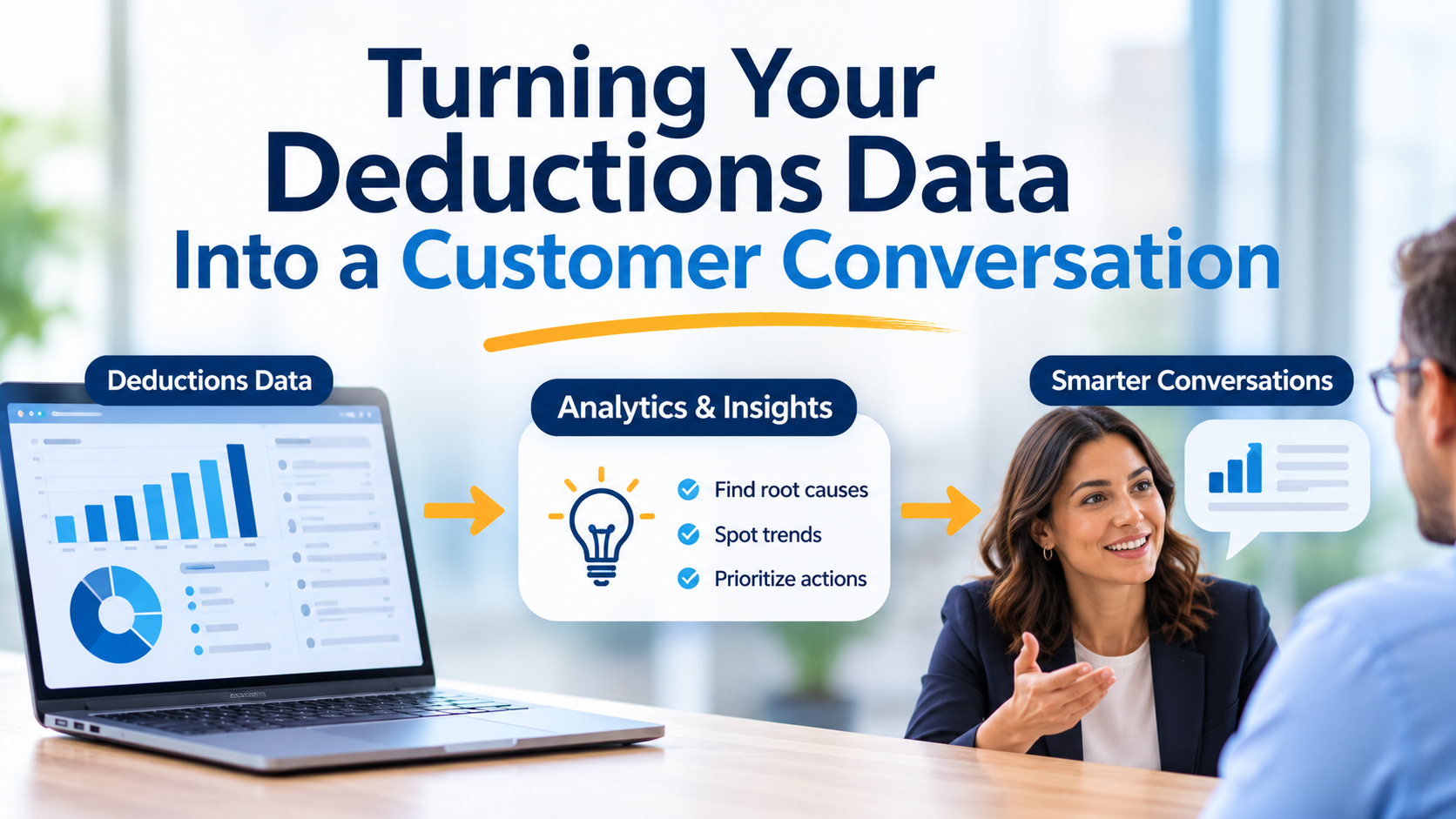
Most teams treat deductions as a cleanup task. A customer short pays an invoice, someone researches the reason, the deduction gets resolved or written off, and the team moves on to the next one. That daily rhythm keeps cash flowing, but it leaves a valuable asset unused. Every deduction is a small piece of feedback from a customer, and when you gather those pieces together, they tell a story you can bring directly to the customer.
Every Deduction Carries a Message
A short pay is rarely random. Customers deduct for reasons: a shipment arrived late, a pallet was damaged, a price did not match the agreement, a promotion was applied differently than expected. Each one points to something specific in the relationship between your business and that customer.
When deductions are handled one at a time, those messages stay buried in individual claims. When they are organized and reviewed together, patterns appear. One customer may deduct repeatedly for the same pricing discrepancy. Another may consistently report shortages from a single distribution center. A third may take promotional deductions that do not match the terms on file.
What the Data Can Tell You
Which deduction reasons occur most often, and for whom. Grouping deductions by reason code and by customer shows where the real volume sits. A handful of customers and a handful of reasons usually account for a large share of the total.
Which deductions are valid and which are not. A clear view of valid and invalid deductions helps your team focus its recovery effort where it counts, and it gives you a factual basis for conversations with customers about the claims that do not hold up.
Where the root cause lives inside your own business. Many deductions trace back to something internal, such as a pricing record that needs updating, a shipping process that needs attention, or an agreement that was never documented clearly. Seeing those patterns gives your team a chance to fix the source, which reduces future deductions as well.
How a customer's deduction behavior changes over time. A sudden increase in deductions from a specific customer is a useful early signal. It may point to a service issue, a change in their internal process, or a question about your agreement that has gone unanswered.
Bringing the Data to the Table
The real value shows up when this information moves from the AR team to the people who manage the customer relationship. A conversation that starts with "here is what we see across the last two quarters" is far more productive than one that starts with a single disputed claim.
Good customer conversations built on deductions data tend to share a few traits. They are specific, pointing to actual patterns instead of general impressions. They are collaborative, framing the discussion as a shared effort to reduce friction for both sides. And they are forward looking, focused on agreeing to a fix rather than relitigating past claims.
For the customer, this approach shows that your team is paying attention and wants to make the relationship easier to run. For your team, it turns a recurring source of effort into an opportunity to strengthen the account.
What Makes This Possible
None of this works without clean, organized data. Deductions need to be captured consistently, categorized with meaningful reason codes, and connected to the related invoices, shipments, and agreements. When that information sits in separate spreadsheets or in the memory of one experienced team member, it is hard to see the pattern, and harder to share it with others.
This is where deductions management automation earns its place. Automation captures deductions as they arrive, applies consistent categorization, links each claim to its supporting documents, and keeps the full history in one place. That foundation makes trend reporting simple and gives your AR and sales teams the same facts to work from.
The Takeaway
Deductions will always be part of doing business, but they do not have to remain a cost center that your team works through one claim at a time. Organized and reviewed together, deductions data becomes a practical guide to where your processes, agreements, and customer relationships can improve. Teams that bring that insight into the conversation with their customers resolve more issues at the source and build stronger accounts along the way.
At oAppsNET, our Deductions Management solution captures, categorizes, and tracks deductions so your team can spend less time chasing claims and more time acting on what the data reveals. If you would like to talk through how deductions data could support your customer conversations, we would love to chat. Want to meet in person? Find our booth at AFP.